
Ravisloe Tree Loss became a defining 2026 course-design issue after severe summer storms damaged one of Donald Ross’s Illinois layouts. The immediate facts are clear enough to warrant careful study: Ravisloe Country Club in Homewood, Illinois, lost a major portion of its tree population during storms on July 27, 2026, and August 11, 2026. What remains less certain, at least from public reporting, is the full hole-by-hole effect on play, habitat, shade, and long-term course identity.
That uncertainty matters. Trees on a golf course are not merely background scenery. They frame sightlines, influence preferred angles, soften wind, provide shade, and support habitat. At Ravisloe, those functions carry extra weight because the property had been formally recognized for its tree collection before the 2026 damage. A sound assessment has to separate verified damage totals from design interpretation, then ask what restoration should protect: canopy count, species diversity, original architectural intent, daily-play strategy, or some balance of all four.
Storm Damage At Ravisloe Country Club
The July And August 2026 Losses
On July 27, 2026, a tornado struck Homewood and knocked down more than 100 trees at Ravisloe Country Club. A later storm on August 11, 2026, caused the loss of about 10 more trees. The same reporting noted that Ravisloe had earned Level One arboretum status in 2022 and was described as the world’s first golf course arboretum, a distinction tied directly to its tree collection Homewood-Flossmoor Chronicle report.
Those dates are important because they keep the discussion grounded. This was not a slow thinning program, a renovation-driven removal plan, or a gradual canopy adjustment. It was a storm event followed by another storm event. For a course that had built part of its identity around trees, the loss created an immediate maintenance challenge and a longer design question: how does a Donald Ross course recover when a natural feature that helped define play has been removed in a matter of weeks?
Ravisloe Tree Loss By The Numbers
The scale of Ravisloe Tree Loss should be read against the size of the collection before the storms. Public reporting before the 2026 damage stated that Ravisloe’s arboretum program included nearly 3,000 trees across more than 100 varieties, and that Dr. Claude Gendreau had added about 600 trees since acquiring the property in 2009 Audacy report.
That context does not make the 2026 losses small. A loss of more than 100 trees can alter corridors even on a property with thousands of trees, particularly if the damage is concentrated near tees, landing areas, greens, or boundary edges. Public accounts do not identify each tree’s location, species, age, or architectural function, so it would be premature to assign specific hole-by-hole strategy changes without a verified tree map. Still, a course-design reading can say this much: the strategic value of a tree depends on placement, maturity, and relationship to play, not just its existence on an inventory sheet.
Ravisloe Tree Loss And Course Strategy
How Trees Shape Shot Values
On many older parkland courses, trees help establish the golfer’s decision from the tee. A tree line may ask a player to curve the ball, lay back from a narrowed landing zone, or choose a more conservative side of the fairway to improve the next angle. If those trees fall, the hole can become wider in practice even if the fairway cut has not changed. That does not automatically make a hole worse. It may reveal original ground contours, expose cross-slopes, or return options that had been shaded out over time. But it changes the question the player sees.
For Ravisloe Tree Loss, the central design question is not simply whether replacement trees should be planted. It is where, why, and at what maturity. A one-for-one replanting plan may restore a count, but it may not restore the playing corridor for decades. Conversely, leaving gaps without study may remove hazards, visual buffers, or habitat connections that had become part of the course’s modern character. The better course-design standard is evidence based: map the lost trees, identify which ones shaped play, separate strategic trees from background canopy, and then prioritize replacements where they affect golf and ecology together.
Visual Corridors And Player Perception
Golf architecture often works through perception. A line of mature trees can make a landing area appear tighter than its measured width. A single tree near the inside of a dogleg can influence club choice, even when it is not a formal hazard under the Rules of Golf. Removing that feature can change confidence, target selection, and pace of play. In that sense, storm damage can alter architecture without moving a bunker, tee, or green.
This is why comparisons to other tree debates are useful, as long as they are not treated as identical cases. Tree removal and course identity have also been discussed in relation to East Potomac’s course corridors, where design, access, and cultural questions intersect. Ravisloe’s situation is different because the 2026 losses came from storms, not a planned project, but both cases show how trees can sit at the center of golf architecture rather than at its edge.
Ecosystem Value Beyond The Scorecard
Arboretum Status And Environmental Meaning
Ravisloe’s arboretum status gives the storm damage an ecological dimension beyond normal course maintenance. An arboretum is not just a place with many trees; it implies identification, stewardship, and educational value. Because public reporting described Ravisloe’s collection as nearly 3,000 trees across more than 100 varieties before the storm damage, the loss affects more than shade and framing. It touches species representation, age distribution, and the long-term resilience of the property’s planted environment.
The public sources do not provide a full ecological survey after the storms. That means claims about wildlife loss, soil change, or stormwater effects should be made cautiously. What can be said is narrower but still meaningful: mature trees often provide canopy, cooling, habitat structure, and water interception that young replacement trees cannot immediately match. From a golf design standpoint, the same maturity creates scale and enclosure. From an ecosystem standpoint, it represents time, structure, and continuity.
Why Replacement Is Not Just Arithmetic
If a course loses 110 trees and plants 110 new ones, the number may look balanced, but the system is not instantly restored. Young trees differ from mature trees in canopy spread, root structure, wildlife value, shade, and visual mass. They also require years of establishment and protection. On a golf course, they must be placed with turf health, playability, sightlines, safety, and maintenance access in mind.
A careful restoration plan would likely distinguish between several categories of loss:
- trees that framed strategic corridors or affected preferred angles;
- trees that served as visual buffers between holes or property edges;
- trees that contributed to species diversity within the arboretum collection;
- trees that provided shade near tees, paths, or gathering points;
- trees whose removal opened turf, drainage, or sunlight opportunities.
That last category deserves attention. Tree loss is damaging, but not every opening is architecturally harmful. Some courses become overplanted across decades, narrowing options beyond an architect’s original intent. The available reporting does not show whether that was true in specific parts of Ravisloe. A cautious analysis should leave room for both repair and selective restraint.
Donald Ross Design Questions After Tree Damage
Ross Architecture And Later Tree Growth
Donald Ross courses are often judged by green complexes, approach angles, fairway movement, and the way hazards influence decision-making. Trees can support those ideas, but many mature tree patterns at older courses developed after the original design period. That distinction matters at Ravisloe. The proper response to storm loss is not automatically to recreate every pre-storm corridor exactly as it stood in July 2026. Nor is it sound to use storm damage as a reason to erase the arboretum identity that the club had built.
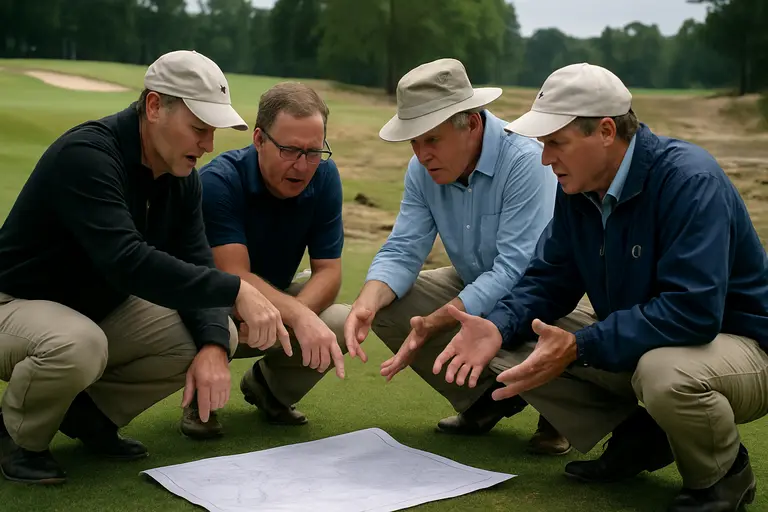
A Ross-sensitive recovery would start with documentation: current aerials, historic plans if available, pre-storm tree inventory, agronomic conditions, and golfer sightlines from tees and landing zones. From there, the club could decide which lost trees were essential to present-day strategy, which contributed mainly to environmental or aesthetic value, and which openings might allow a clearer expression of ground contours. That is a design process, not a simple cleanup task.
What Public Reporting Does Not Yet Tell Us
There are limits to the public record. The reporting cited here confirms the dates, scale, and arboretum context of the loss. It does not publish a complete list of affected holes, a tree-by-tree replacement plan, or measured changes to scoring patterns. For that reason, claims that particular holes have become easier, harder, better, or worse should wait for firmer evidence.
Still, the broader lesson is sound. Ravisloe Tree Loss shows how climate events, course architecture, and environmental stewardship can collide at a single venue. Golf coverage often separates agronomy, design, and business operations, but storms do not respect those categories. The same fallen tree may affect a superintendent’s cleanup schedule, a golfer’s target line, an arboretum record, and a club’s public identity. For readers interested in more insights from various sports venues in the network, including Dashers Hockey, it emphasizes a shared perspective: playing environments are intrinsic to the overall sports experience, far beyond mere surroundings.
Ravisloe Country Club And The Work Ahead
A Practical Recovery Standard
The next phase of Ravisloe Tree Loss should be judged by clarity rather than speed. A credible plan would identify what was lost, explain why certain areas receive priority, and connect planting choices to both golf strategy and arboretum value. It would also avoid treating all trees as interchangeable. Species selection, spacing, growth habit, disease resistance, and long-term maintenance needs all matter if the goal is to rebuild a healthier tree system rather than replace a photo backdrop.
For golfers, the course may already feel different in places where canopy once narrowed sightlines or framed approaches. For the arboretum, the loss may be felt through reduced maturity and altered variety distribution. For the Ross design, the storms may create both wounds and opportunities. Some corridors may need careful replanting to recover strategic definition. Other areas may benefit from open air, sunlight, and clearer ground features. The right answer is likely uneven across the property.
How To Read The Case Fairly
Ravisloe Country Club now offers a useful case study because it ties a verified weather event to questions that many older golf courses face more gradually. How many trees are enough? Which trees define play? When does preservation protect architecture, and when does it preserve later growth? How should an arboretum course weigh ecological continuity against design recovery?
Those questions cannot be answered fully from the current public record. What is supported is significant: severe storms in July and August 2026 removed more than 100 trees from a Donald Ross course that had been recognized as the world’s first golf course arboretum and had maintained a large, varied tree collection. That is enough to make Ravisloe a serious study in course resilience. The next credible step is not a slogan about restoration, but a documented plan that treats trees as living design elements, environmental assets, and long-term commitments.