

The East Potomac renovation has moved from concept art and political statements into a more defined, but still contested, course-change proposal as of Oct. 20, 2026. The supported record shows an interim operating deal, a planned shift from 36 holes to one long 18-hole layout, a stated closure date of Nov. 15, 2026, and a court-ordered pause on tree-cutting through Oct. 26, 2026. For golfers studying the site visually, the key question is not only how a championship routing could fit Hains Point, but what the redesign may mean for public access, short-course golf, shoreline work, and daily play.
East Potomac renovation Status As Of October 20, 2026
East Potomac Golf Links sits in a rare urban position: a public golf property at Hains Point, framed by water, parkland, and views tied closely to Washington, D.C. That setting is central to why the project has drawn attention well beyond course architecture circles. A longer championship-style course can create more dramatic tee shots and approach angles, but a smaller hole count can also change who the facility serves and how often casual golfers can use it.
East Potomac renovation Timeline Signals
On May 8, 2026, the Trump administration and National Links Trust reached a deal allowing the nonprofit to continue operating East Potomac Golf Links on an interim basis until the National Park Service begins what was described as a historic restoration of the course, according to The Washington Post. That detail matters because the course has not simply been handed from one operating model to another in a completed transition; the record points to an interim period tied to federal action.
Research notes show Tom Fazio was announced in June 2026 as the architect for the overhaul. They also show the redesign would reduce the present 36-hole setup to a single championship-style 18-hole course, with a reported length of more than 7,600 yards from the back tees and more than 5,700 yards from the front tees. In visual terms, that is a major shift. The current multi-course public format spreads different types of golf across the site. The proposed routing would concentrate the property around one longer course, increasing scale while reducing the number of holes available for different skill levels.
Legal Pause And Work Limits
The project also has a legal checkpoint. Federal Judge Ana C. Reyes ordered the Trump administration to halt tree-cutting at the site until Oct. 26, 2026, citing notice issues while a lawsuit was pending, the Associated Press reported. As of Oct. 20, 2026, that order remained relevant to any visual assessment of near-term site work. It means golfers should separate renderings and public statements from physical construction activity on the ground.
A previously announced Sept. 1, 2026 construction start passed without work having started at that time, according to the research record. On Oct. 18 and 19, 2026, President Trump posted that the facility would close starting Nov. 15, 2026, for about 15 months to rebuild it as a championship-level venue. Those posts also referenced potential capability for events such as the U.S. Open, Ryder Cup, and PGA Championship. That should be read carefully: a stated ambition to create a venue capable of major events is not the same as a confirmed championship award.
What The Renderings Suggest
For visual-tour purposes, the proposed East Potomac Golf Links overhaul is best read through scale, edges, and access points. The research notes do not provide a verified hole-by-hole plan, so any detailed claim about specific fairway corridors, green sites, or bunker placement would go beyond the available record. What can be assessed is the stated design direction: fewer holes, longer yardage, championship presentation, and close dependence on shoreline work.
Scale From The Tees
A course stretching beyond 7,600 yards from the tips would change the visual rhythm of the property. Longer back-tee carries often require broader landing zones, more strategic separation between holes, and greater distance between teeing grounds and green complexes. From the front tees, the reported length of more than 5,700 yards suggests the course would still need thoughtful forward-tee placement to remain playable for a broad public audience. The supported facts do not establish slope, rating, fairway width, or forced-carry distances, so playability cannot yet be judged with precision.
The East Potomac renovation is also linked to a shift in course identity. The current site has functioned as a varied public golf facility, while the proposal emphasizes championship form. That contrast is visible before any shovel work begins: a multi-course civic facility and a single long course serve overlapping but not identical audiences. A visual tour should therefore look at more than beauty shots of fairways and water. It should track where beginners, seniors, juniors, walkers, and short-game players would fit after the redesign.
Water Edges And Shoreline Work
The shoreline is not a backdrop issue. Research notes state that the broader work includes reinforcing or rebuilding a deteriorated sea wall along much of East Potomac Park’s shoreline, including the Potomac River edge, the Hains Point turn, the Washington Channel side, and the unfinished portion of the Tidal Basin. One five-year contract proposal indicated that sea wall work could last until summer 2031. That long schedule matters for golf visuals because water, construction staging, path access, and course routing are likely to intersect.
For photographers, media teams, and golfers reading aerial views, the waterline will shape how the course feels. East Potomac’s appeal has always been tied to open sky, low-lying fairways, and the sense of playing within a civic park rather than a private resort setting. If shoreline hardening, construction fencing, or regraded edges appear during the work period, those elements will become part of the visual record of the project.
Public Access And Design Tradeoffs
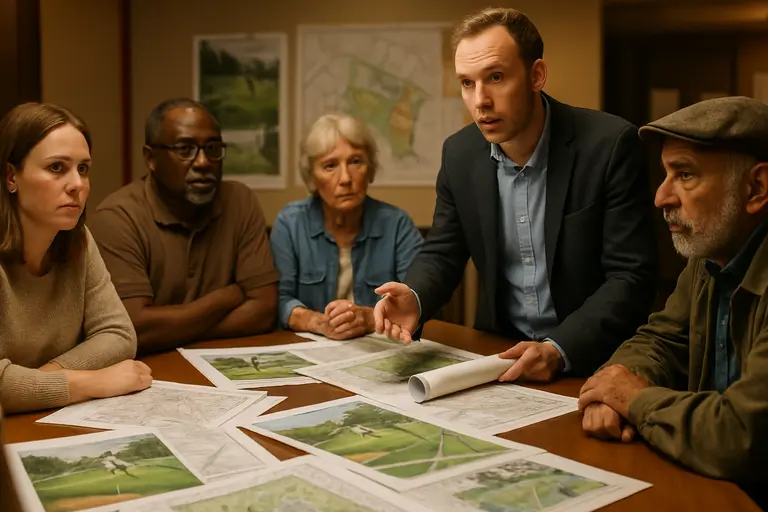
The clearest design tradeoff in the research is hole count. Reducing 36 holes to 18 may allow a longer course to be built, but it also reduces the number of holes in daily circulation. That is not a minor operating detail at a public facility. Fewer holes can affect tee-time supply, pace patterns, instructional programming, and low-pressure entry points for new golfers.
Short Golf And Amenity Questions
Research notes say the trim-down plan appears to eliminate or sharply reduce certain public amenities, including the miniature golf course, the short par-3 course, and possibly pathways such as the riverside bike trail and other Hains Point amenities that were not clearly included in renderings. The miniature golf course had reportedly been renovated in 2024 at a cost of more than $1 million. Because the renderings have not answered every access question, cautious wording is warranted: the public record supports concern and uncertainty, not a fully settled amenity map.
That uncertainty is central to any East Potomac renovation visual review. A championship course can be impressive from elevated media angles, with longer corridors and larger visual gestures. Yet the public value of the property also rests on small-scale features: short holes, practice access, walkability, and low-barrier recreation. If those uses are removed or compressed, the course may look grander while serving a narrower daily-golf audience.
Funding, Contracts, And Public Process
The research notes identify a bidding document estimating the golf-course construction contract between $20 million and $49 million in 2027, with a related engineering and technical-services contract estimated at $500,000 to $999,000. Those figures give the proposal a scale that belongs in any serious design discussion. A renovation of that size is not only about greens, tees, and bunkers; it touches procurement, public oversight, maintenance expectations, and long-term operating costs.
Local stakeholders, including members of Congress, advocacy groups, and park users, have raised concerns about transparency on funding, environmental review, public access, and whether the project follows preservation and procurement requirements. Those concerns do not prove the final plan will fail public tests, but they do show why the project remains unsettled as of Oct. 20, 2026. For a related site-specific read, our East Potomac visual tour tracks how design signals and access questions have developed.
East Potomac renovation Visual Takeaways
The most defensible reading is that the East Potomac renovation is a high-stakes redesign proposal with a clear championship ambition and unresolved public-access questions. The visual promise is easy to understand: a long Fazio-led 18-hole course near the Potomac, framed by water and federal parkland, could produce striking golf scenes. The caution is just as clear: no verified hole-by-hole plan in the research record confirms how the routing would balance scale, everyday play, short-course access, and park movement.
Golfers should watch three visual markers as the process continues after Oct. 20, 2026. First, look for whether final routing materials show forward tees that make the course playable across skill levels. Second, look for how paths, bike access, mini golf, and par-3 functions are treated in formal plans rather than promotional images. Third, look for how sea wall work changes the course edge, especially where water views, construction areas, and public circulation meet.
That kind of viewing is not passive. It treats course imagery as evidence. A beautiful rendering can show aspiration, but it cannot answer every access, environmental, or operating question. The stronger assessment will come from comparing official plans, court actions, contract details, and on-site conditions as they are documented. Readers who follow sports venue changes across other games can also find related coverage within the same network at Booksonbaseball, where facility context and sports culture intersect in a different setting.
For now, the supported record points to a proposed conversion from a broad public golf complex into a single championship-style course, with legal, shoreline, cost, and access issues still part of the picture. That is why the best visual analysis should stay grounded: admire the possible scale, but keep asking what the finished course would preserve for everyday D.C. golfers.