
The East Potomac trees dispute shifted from a maintenance issue into a course-design question after tree removal began at East Potomac Golf Links in Washington, D.C. On August 28, 2026, The Washington Post reported that more than 60 trees had already been removed in recent weeks, with removals at the perimeter, parking lots, and playing corridors on the Blue, Red, and White courses reported removals. For golfers, the central issue is not only how many trees were cut. It is how canopy, corridors, public paths, and practice space may fit into the future of a long-used municipal golf site at Hains Point.
The available public record supports caution. As of early September 2026, the broader redesign had been announced, and some site activity had occurred, but a detailed public cost, final design, and complete construction schedule had not been released. That leaves a narrow lane for analysis: what the reported facts suggest about course architecture, and what remains unresolved.
Why East Potomac Trees Became A Design Issue
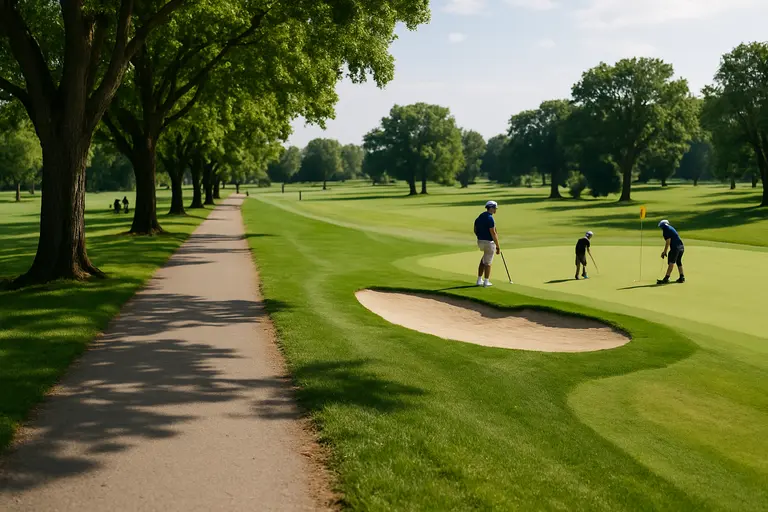
Trees are not decoration on a golf course. They frame sight lines, separate holes, alter wind exposure, influence recovery angles, and affect how comfortable a walking round feels during hot weather. At East Potomac, the controversy is sharper because the property is not only a golf venue. It sits within a public park used by golfers and non-golfers, including people who bike, walk, picnic, and fish.
East Potomac Trees And Playing Corridors
The reported removals included trees from corridors on the Blue, Red, and White courses. Without a publicly released hole-by-hole tree plan, it is not possible to say which shot values changed most. Still, from a course-design standpoint, corridor tree loss can affect the way golfers read a hole from the tee. A tree line can define a safe side, screen an adjacent hole, or create a recovery decision after a missed drive. Removing mature trees can make a hole feel wider, but it can also expose views, wind, and adjacent-use conflicts that were previously screened.
That is why the East Potomac trees debate belongs in a design discussion rather than only an environmental one. The same tree can be part of habitat, shade, park character, and golf strategy. Good public-course planning has to account for all of those roles, especially on a site where multiple courses and non-golf amenities have shared limited ground.
What Officials Said About Maintenance
At a September 3, 2026 federal court hearing, attorneys for the White House stated that 150 trees out of roughly 3,800 in East Potomac Park had been removed. According to the research record, they identified 77 as invasive species and the remaining 73 as dead, dying, or hazardous. Officials maintained that the work was routine maintenance rather than part of the proposed full redesign.
Those details matter, but they do not end the design dispute. Maintenance removals can still change how a course plays and how a park feels. The key distinction is procedural: whether the removals were safety and ecological work already within park management, or whether they effectively began shaping the future course before final approvals, public documentation, and legal questions were settled.
How The Proposed Course Plan Changes The Question
The redesign announced on May 14, 2026 by Interior Secretary Doug Burgum was credited to Tom Fazio and would convert the current 36-hole golf property into an 18-hole championship-length course of about 7,660 yards from the back tees. The proposal also included an expanded practice area and a nine-hole pitch-and-putt element. Those are not small adjustments. They would shift East Potomac from a multi-course municipal model toward a smaller number of full-length holes with a different practice and short-course mix.
The 36-Hole To 18-Hole Shift
A move from 36 holes to 18 holes changes access mathematics as much as architecture. The research notes do not include tee-time capacity projections, so no firm claim can be made about future availability. But fewer regulation holes usually require close scrutiny of who gets to play, how often, and at what price. In May 2026, the National Links Trust and the Trump administration struck a deal under which the trust would continue operating East Potomac on an interim basis while the National Park Service pursued renovations. The deal was described as promising affordable rates for local golfers.
From a design perspective, a 7,660-yard back-tee course suggests tournament-scale length. That does not automatically make a course unsuitable for public golf, provided forward tees, walking routes, pace management, and short-game options are well planned. The missing public details are the issue. Until the final routing, tee structure, walking connections, and public-access policies are released, the claimed balance between championship ambition and municipal access remains hard to evaluate.
Public Amenities And Access Signals
The research record notes that certain renderings did not show the riverside bike and pedestrian path, the miniature-golf course, or the grove of historic cherry trees along Hains Point. Renderings are not final construction documents, so absence from a rendering should not be treated as proof of removal. Even so, those omissions became part of the controversy because East Potomac’s identity has long depended on shared public use, not only golf.
For a related design-focused review on the same property, the site’s prior East Potomac renovation analysis examined the proposed Fazio layout, reduced hole count, access questions, and legal status as of September 8, 2026. Readers who follow broader public-sport-space coverage across the same network may also recognize AP Levante, a related site within the network, as a potential resource for further insight.
Legal And Public-Use Pressure Points
The legal dispute placed the tree issue inside a wider question: how much change can occur at East Potomac Park before historic-preservation, environmental, and public-access review processes are complete. Environmental and preservation groups, including the D.C. Preservation League and others, filed lawsuits asserting that planned changes may violate the National Historic Preservation Act and the park’s 1897 founding congressional act, which designated parkland for recreation and the pleasure of the people.
The Court Order On Further Tree Work
A federal judge ordered that the government must provide notice before removing more than 10 trees and cautioned against irreversible changes without court-approved processes, according to the Associated Press court report. That order did not resolve the course-design debate, but it did impose a procedural boundary around further tree work.
For course planners, that boundary is significant. Golf construction often requires sequencing: clearing, grading, drainage, irrigation, shaping, turf establishment, and grow-in. Tree removal can be an early step, but it can also become the most visible sign of a project before the public has seen final documents. The court’s notice requirement effectively made any larger next step more visible to litigants and the public.
Environmental Concerns Beyond Golf
Critics raised concerns that mature tree loss could reduce shade, worsen stormwater runoff, reduce air quality, diminish habitat, and affect non-golf uses such as picnicking, biking, and fishing. Those concerns are not separate from golf architecture at Hains Point. A public course in a flood-prone urban park has to be judged partly by how it handles water, shade, circulation, and shared edges.
The East Potomac trees question therefore sits at the intersection of golf strategy and civic design. A new routing may improve practice facilities or produce stronger championship holes, but the public record available by September 19, 2026 does not yet prove how those gains would be balanced against access, canopy, and park uses.
Course Design Read For East Potomac Golf Links
The safest design reading is also the most restrained one: East Potomac Golf Links appeared to be at a decision point, not at a fully documented construction phase. President Donald Trump announced on June 28, 2026 that work would begin on September 1, 2026, but as of early September the research record indicated that no major construction had started. Tree removal and early site activity had occurred, while major public details remained incomplete.
What Golfers Can Assess On The Ground
Golfers evaluating the course after the removals can watch for several practical signals. These are not claims about the final plan, but observable design questions that follow from the reported work:
- Whether former tree lines on Blue, Red, or White course corridors changed aiming lines from tees.
- Whether removed perimeter trees altered the feel of parking, arrival, or walking routes.
- Whether shade loss affected comfort around tees, paths, practice areas, or waiting points.
- Whether open corridors increased exposure to wind or views of adjacent park uses.
Those observations can help separate confirmed impacts from assumptions. They also keep the discussion grounded in how public golfers actually use the course, rather than treating the property only as a future championship concept.
Questions That Remain Before Construction
The unresolved questions are specific. What is the final routing? Which trees, if any, are scheduled for removal beyond the work already described as maintenance? How will the bike and pedestrian path, miniature golf, cherry trees, and other public amenities be treated in binding documents? What will the final cost, schedule, rate structure, and construction phasing look like?
Until those answers are public, the future of East Potomac trees and the golf course should be discussed with care. The reported removals were real. The proposed Fazio redesign was real. The court limits were real. What remains uncertain is how those pieces will combine into a final public golf facility at Hains Point, and whether the finished plan will preserve East Potomac’s broad civic role while changing its architecture.